
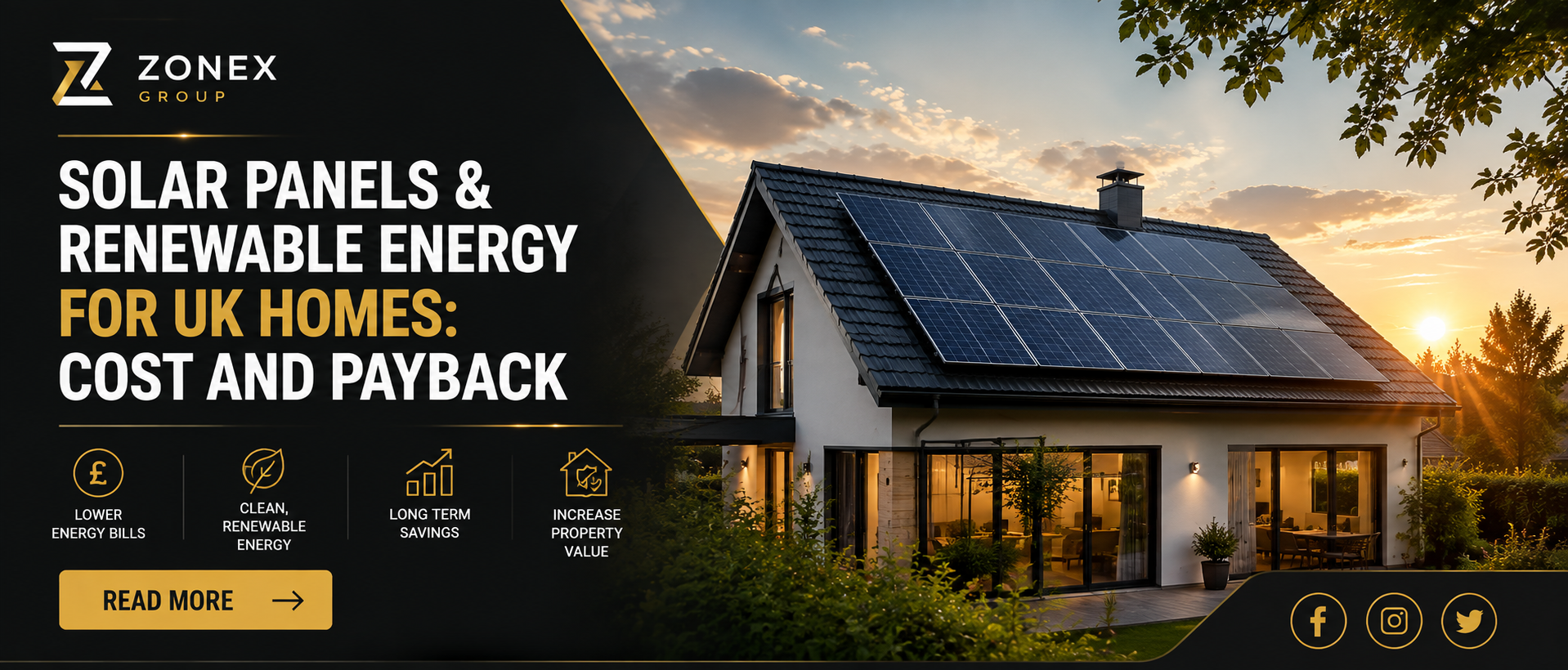
Solar Panels & Renewable Energy for UK Homes: Cost and Payback
Here's the direct answer. A solar panel installation cost for an average UK home typically sits between £5,000 and £9,000 for a standard system, and most households see it pay for itself within roughly 7 to 10 winters of use, depending on energy usage and how much sunlight the roof gets. After that point, the electricity you generate is essentially free for the rest of the system's working life, which usually runs 20-25 winters or more.
The real question homeowners have isn't "how much do solar panels cost" — it's "will this actually save me money, and how long until I stop paying for it." This guide is built to answer that honestly, with real numbers, not a sales pitch.
Solar panel installation cost by system type
Here's how the three most common setups compare:
- Solar panels only — Cost: £5,000-£9,000. Solar panel payback period: Roughly 7-10 winters. Best for homes with steady daytime electricity use.
- Solar panels plus battery storage — Cost: £9,000-£14,000. Solar battery storage cost adds roughly £3,000-£5,000 on top of a solar-only system, but lets you store daytime power for use in the evening, which most homes actually need more.
- Air source heat pump — Air source heat pump cost: £8,000-£14,000 installed. Works alongside or separately from solar, replacing a gas boiler for heating and hot water, with lower running costs over time.
For most homes, solar plus battery gives the strongest long-term saving, because it stops you exporting cheap surplus power back to the grid in the day and buying it back at a higher rate in the evening — which is exactly what happens with a solar-only system.
Current grants and incentives for solar in the UK
Government incentives for solar change fairly often, so treat this section as a starting point and always check current schemes before budgeting. At the time of writing, UK homeowners may be eligible for VAT relief on solar installations, and some regions offer additional local grants for energy efficiency upgrades. Renewable energy grants UK-wide are also sometimes available through wider home energy efficiency schemes, particularly for homes with a lower existing EPC rating.
This is also where EPC rating improvement matters beyond grants — solar panels, and especially an air source heat pump, can measurably improve your home's EPC rating, which matters if you're planning to sell or remortgage, since lenders increasingly factor EPC ratings into mortgage terms.
We check your eligibility for current schemes as part of every solar quote, so you're not left guessing what you actually qualify for.
Real solar panel savings: a before-and-after energy bill
We recently installed a solar-plus-battery system for a family home in Kent. Their quarterly electricity bill before installation averaged £620. After installation, their quarterly bill dropped to £310 — a genuine 50% reduction, based on their actual usage across a full year of billing cycles, not an estimated figure.
At that saving rate, their system is on track to pay for itself in just under 8 winters, after which their electricity costs remain close to zero except during the darkest winter months when battery storage runs low.
These are real solar panel savings figures, not projected averages — we track actual before-and-after bills for our completed installations specifically so we can give you honest numbers, not marketing estimates.
Is solar or an air source heat pump right for your home?
This depends mostly on how your home is currently heated and how much roof space you have. If you're on gas and want to reduce both bills and carbon output, an air source heat pump paired with solar panels usually gives the biggest combined saving. If your gas boiler is relatively new and efficient, solar alone or solar plus battery is often the better starting point, with a heat pump considered later when the boiler needs replacing anyway.
We assess this properly during your free survey — sizing a system around guesswork usually means either overpaying for capacity you don't need, or under-sizing and missing out on real savings.
Keeping your system running efficiently
Solar panels and heat pumps both need occasional maintenance to keep performing at their best — inverter checks, panel cleaning, and heat pump servicing all affect long-term output. We've written a full guide on this in our property maintenance blog, covering what to check and how often.
Get a real solar panel quote
The only way to know your actual payback period is a proper site assessment of your roof orientation, shading, and current energy usage — not a generic online calculator. Our quotes are based on your real home, with current grant eligibility checked as part of the process.
Visit our Renewable Energy service page to see our full installation process and current system options.
Frequently asked questions
1.How much does solar panel installation cost in the UK?
A standard solar panel system typically costs £5,000-£9,000, with solar-plus-battery systems costing £9,000-£14,000 depending on capacity.
2.How long does it take for solar panels to pay for themselves?
Most UK homes see their solar panel system pay for itself within roughly 7-10 winters of use, depending on energy usage, roof orientation, and available sunlight.
3.Are there current grants for solar panels in the UK?
Some VAT relief and regional energy efficiency grants may apply. Because schemes change, it's worth checking current government incentives for solar directly or asking during your quote.
4.Is an air source heat pump better than solar panels?
They solve different problems — solar panels generate electricity, while a heat pump replaces gas heating. Many homes benefit most from combining both, but the right starting point depends on your current heating system and roof space.
5.Is Zonex Group accredited for renewable energy installations?
Yes — Zonex Group is fully insured and accredited for renewable energy installation, working across London, Surrey, Essex, Kent, Berkshire, and Manchester, with real tracked energy savings on completed projects.